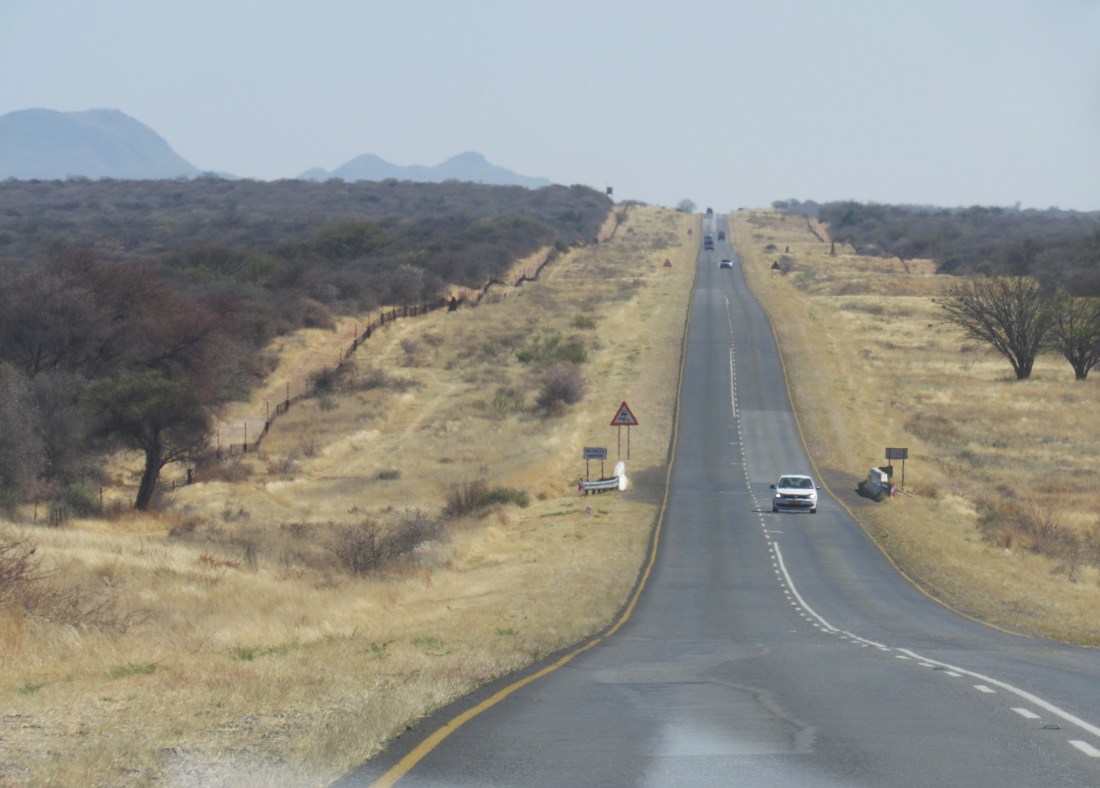
In Namibia, there aren’t many people and there are even fewer cars. Thus, when I needed to go anywhere I relied on fate. I donned long sleeves and a hat, and I set my feet to walking on the sandy road. Without fail, some other traveler eventually crossed my path. Sometimes the driver was headed in a different direction, so we smiled sadly and parted ways. Other times, our itineraries matched up–at least in part–and I hopped into a truck bed or a backseat. Surprisingly often, my automobile-owning saviors transported me for free, especially if my desired destination was on their way, anyway.
Just over a year ago, I was asked to visit a kindergarten classroom on the Northwest side of Chicago. The purpose of my visit was to join the class and to pay extra attention to two twin sisters from Burundi. The girls were a source of constant stress for their compassionate teacher, Miss Chavez, who suspected that they were utterly lost during instruction. She reached out to the community center where I worked, who sent out a call for anyone who could talk to the twins in Swahili or Rundi–the languages spoken by their family at home–and assess how much they understood.
My neighbor, let’s call him Shiveli since he is the first born, is just days away from finishing 8th Grade. Lately, he has been too busy studying for his final exams to visit me, as he normally does. When he visits me, he does it in proper African fashion. That is, he shows up, he greets me, and he invites himself in. I admit that sometimes this peeves me if I feel too busy for conversation. But, each time my self-important busyness fades away when Shiveli shares his stories.
There is a someone–or rather, a something–that has accompanied me on every journey. Yet, I have neglected to share that something’s story. I regret this, and I feel that it is time I acknowledged my poor skin. It’s been patiently waiting for its story to be shared.
My skin has strayed only a few times from the Rust Belt of the United States; that strip of land between lake and river sacrificed for American industry–for automobiles, airplanes, and railways. It knew different versions of this old place: Michiana, the Allegheny side of Appalachia, Green Mountains, and a Windy City; but versions hold similarities. My eyes are used to farms atop filled-in coal mines and the rusted mills where that coal was sent. My ears have always heard gun shots, demolition derbies, and the slow hum of tractors. My nose is accustomed to bonfires and summer sweet corn. My tongue knew goulash, halupki, pierogis, pepperoni rolls, and homemade maple syrup. But, my skin–my skin has felt many sensations.
One of the first tasks to undertake with my Ohalushu-based host mother was to do some shopping in Ondangwa. Ondangwa is the sprawling town just south of home via the B1 highway, which spans all the way from Angola to South Africa. After school ended, we met another teacher at the wheel of her massive pickup. Two primary school students were also present, and I heard them mention being sent to buy fish. The two little girls floated up into the covered truck bed, followed by my awkward and gangly self-hoisting.
Our first stop in the city was at a fish distribution center with the slogan “Power in Fish.” Only about ten customers were allowed to enter at a time, so our driver and the two girls took their places in line. I sat with some strangers and bargained for apples. After a small eternity, we continued on our journey. The truck bed received me, the girls, and four bags of frozen, salted fish.
On my second day as volunteer, one of my fellow teachers approached me with questions about the United States. In the past (cf. Tanzania), questions like “Is Canada a state?” and comments like “But you are European” annoyed me. However, my fellow teacher changed the way I feel about these seemingly ignorant questions.
Arbitrary lines
enforced by men in brown suits.
North North once again
.


 Tim the Nomad