The Honor to Tell Someone’s Story

Story

This story comes from my sister, who is in the rotations phase of Medical School. Years ago, when she was in undergrad, she was focusing on politics, design, and peace studies . . . you know, the things that naturally lend themselves to Med. School.

Kidding aside, these things truly did contribute to the kind of doctor that my sister would be. Recently, she wrote about her Photography 101 course, and shared it with me.

Human Beings

Story

This story took place a little over two years ago, but it has been on my mind today. Being good friends with the poet, Haji Gora Haji, my program’s resident director was invited by him to visit his hometown on the island of Tumbatu. Excited about the opportunity, she asked if we four students could also come along, and Mzee Haji Gora agreed. To understand the gravity of this invitation, I should explain that outsiders are typically never allowed on Tumbatu without having been invited and granted permission by a local sheha. I am sure that it is the most isolated place I have ever been. To my knowledge, there are no cars on the island; though, there is an inexplicable, yellow phone booth without any sort of phone in it. We didn’t know what we would see or do there, but if there is anyone better to travel Zanzibar with than Haji Gora, I am not sure who it would be. He speaks in riddles, recounts oral histories of ancient times, and commands more respect than a president.

Barka la Mvua

Story

In Swahili culture, it is said that when a guest comes with the rain, it is a sign of blessings. Additionally, when a guest is trying to leave but the heavy rains are delaying them, that is supposed to be a good sign, too. Especially when the rains cause so much damage, and even death, this belief is certainly tested. However, I still heard it many times this year even after the devastation in Dar and Unguja. People know that despite the damage and no matter how unpleasant, rain will also bring life in the form of plants, crops, and natural balance. This belief first had meaning for me when I walked to my first day of work as an intern in Stonetown two years ago.

0.1_RISE

Zanzibar Njema Atakaye Aje

Story

8_Serena

“Zanzibar njema, atakaye aje” is a saying in Swahili that means something like “Zanzibar is great, come whoever wants to” in English. When I was living with a host family just over two years ago, my younger brother would say it often. Because of the hefty grammar, it was one of the things that I mostly pretended to understand for a long time. Both in grammatical and practical meaning, I think I get it now.

Walimu: The Teachers

Story
        For the last three days of my Zanzibar visit, we went to Pemba, the second largest island in the archipelago. It’s a beautiful place: eternally green, with roads that wind through hills and valleys–drastically different from its big sister, Unguja. Fittingly, in Arabic it used to be known simply as “The Green Island,” or Al-Jazeera Al-KhaDraa’. I’ve been to Pemba once before, and loved it then, too.

31_Manta

      I could write twenty blog posts about Pemba, but for now I’ll focus on one topic. For this trip, it seemed like everyone we met there was introduced either as someone’s teacher or someone’s student.
      First, a great old friend who lives in Wete, the largest town by population, picked us up in a minivan from the airport near Chake Chake. He teaches secondary English nowadays. Currently, his students are reading a book about Ugandans living with HIV. We arrived at the airport exactly at prayer time, so we waited a few minutes until our friend’s own former teacher, turned boss, drove up. We took off down the road, and along the way picked up three more teachers.
      First, a man waved us down and then hopped into the back seat. Soon after, we saw two women and scooped them up, too. Everyone squeezed in, and the fatter of the ladies was given the spacious front seat (it was explicitly under these terms, I promise I’m not being rude). Among the teachers, topics of raucous, passionate discussion ensued; such as poetry, borrowing words from English, and the difference between enh-henh and eh-heh (I promise I’m not making any of that up, either). The next day we met half a dozen more teachers or former teachers. Even store owners introduced us to their former teachers, who happened to be passing by or just hanging out in the vicinity. I began to think that something was lost in translation, because there just could not be this many teachers all around us. In fact, being a teacher is so respected in Tanzania that I have heard friends or coworkers refer to each other as ‘teacher’ before (Mwalimu or Maalim), so I thought this might be going on in Pemba.
      Each time we ran into these teachers and their students the modus operandi was always respect and inclusion. Pembans are known jokesters, so conversation was never boring, but still thoughtful and tempered when teachers were around. Teachers hold sway there. For example, when we didn’t know the way to a certain part of town, but our Wete-based teacher friend was busy, he summoned up a former student who served as our guide for the day without asking for anything in return.
      Finally, on our last day in Pemba our friend’s father (who is also a retired teacher) explained the situation to us. He said that in Pemba there isn’t much employment, but there have always been schools and plenty of opportunities to teach. While everyone can agree that having a diversity of jobs–and lots of them–is better for many reasons, I have to say that having an abundance of teachers is not the worst of situations. In my opinion, a nation without a place for teachers is in a lot of trouble. These teachers initiated and facilitated discussions all around us in Pemba. Especially as such respected men and women, they build communities, and in turn a society.

“Goofy Stuff”

Story

Soon, I am going to travel to Zanzibar and a few months after, Namibia. As a born-and-raised American, I had to update some vaccines so my body doesn’t freak out (as severely) when I eat unwashed fruit. C’mon, body, pick your battles. Anyway, in this day and age I did this by asking Google Maps where the closest travel clinic was…and there, I went.

I made an appointment with my Google-recommended destination, and got some preliminary blood work done back in early April. I was grateful for the doctor who usually works about an hour away. He stopped by the Loop office just for my one appointment. Don’t get me wrong, my gratitude lives on. However, my respect for the doctor quickly died.

A Man Named Paulo

Story

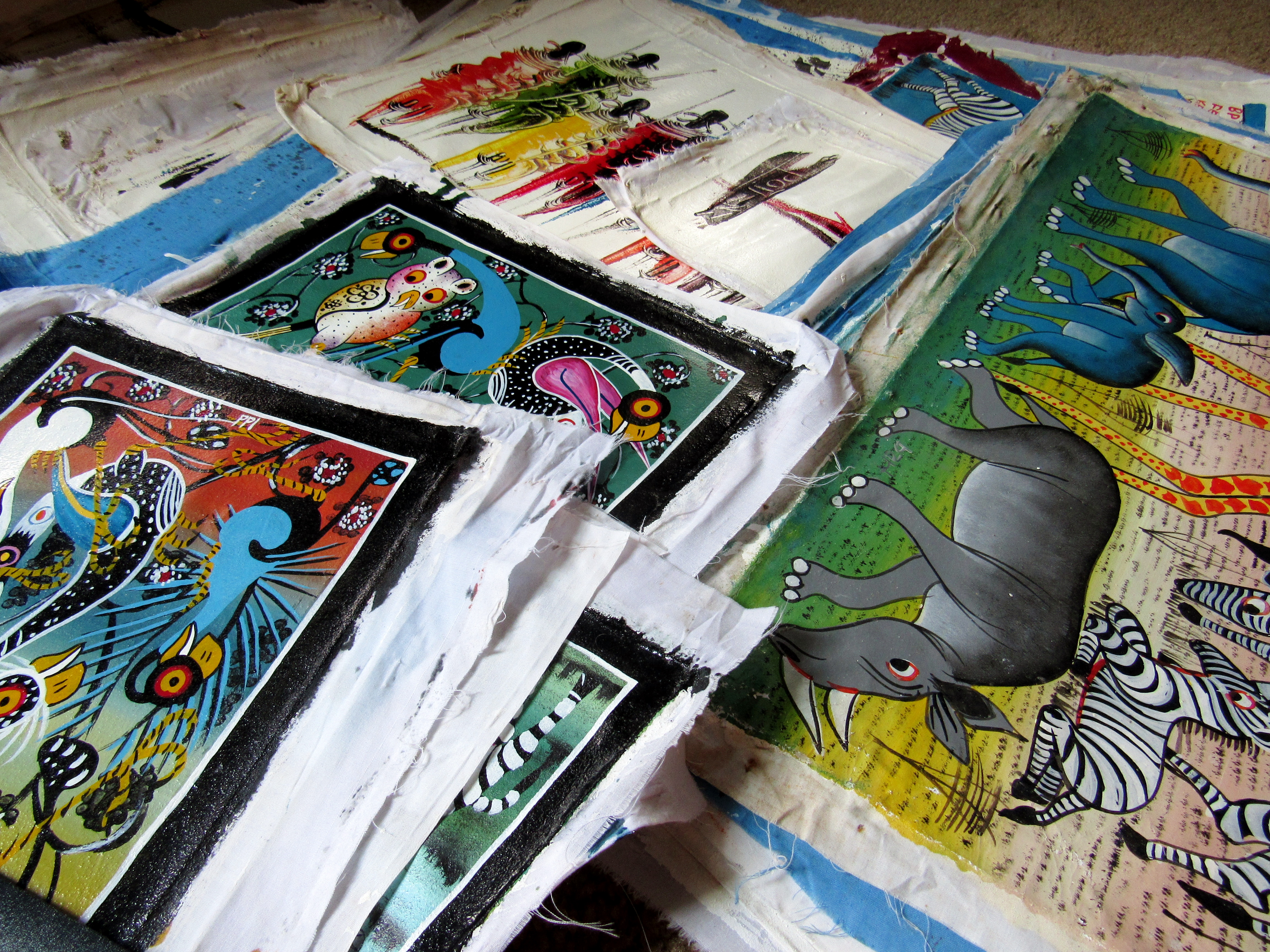
My agreement with two Tanzanian friends to help them sell their art in America has taught me all that the business course I never took in college might have. I have learned the basics like timing and advertising. I also learned that Ebay is efficient, and Etsy is not. I have learned that face-to-face business transactions are always better. And, now thanks to some connections in Chicago, I have learned about a piece of history.

IMG_0276

64 and ْStill Swinging

Story

Today was my last day of teaching, as well as Salma’s 64th birthday. We celebrated with curry, pakora, homemade yogurt, and cake. I also want to share that yesterday Salma told me that sometimes she goes to the park after midnight to swing on the swing set. I very much hope this wasn’t something lost in translation, and she really does. What a fantastic human. ! عيد ميلادها سعيد

144_Uptown

“Very Miss You” and Offensive Numbers

Story

122_Uptown

Apart from subbing, I was only able to teach one term of ESL at the community center. My creative take on grad school and brief return to Zanzibar means that I won’t be around enough to commit to teaching the Spring or Summer terms. This is bittersweet, because I’m excited for what is to come, but truly sad to leave my students.

Church: Part 2

Story

Old St. Pat’s also reminds me of another church I got to visit more recently than Minara Miwili. Last year, I went to Dublin and saw possibly the oldest St. Pat’s that there is. I landed in Dublin in the early morning on March 17th, and I started by looking up the parade route. Gotta start somewhere, and flights tire me out, so standing still sounded great. St. Patrick’s Cathedral was toward the end of the route. I wasn’t sure if I wanted to commit to mass right before the parade began. I might miss it. When I walked up to enter, I noticed most other tourists weren’t going past the gate even though it was open. Two ushers stood by the door, and one stopped me. He told me that the church was not open, I could go in, but if I went in I should stay for mass. So he made my decision for me, and I committed to staying. The timing ended up being perfect, and mass ended not long before the parade got to the intersection by Christchurch where I had found short people to stand behind.

Just like Old St. Pat’s here in Chicago, it was the words of the priest that stuck with me most at (Oldest) St. Pat’s in Dublin. The elderly man, whose name was also Patrick, told the parishioners that his saintly namesake stood for piety and humility. He also stood for a life of overcoming huge challenges, like slavery, hunger, and isolation. The priest opposed what St. Patrick’s Day had become today. He urged us all to go out and serve the community, to overcome physical and spiritual challenges, to unite communities, and to humbly abstain from the drunkenness we were sure to find out on the street.

Then, we all filed out solemnly, and joined the drunkenness on the street.

17_Dublin